 Sofas & armchairs
Velvet, linen, microfibre: what each fabric can take
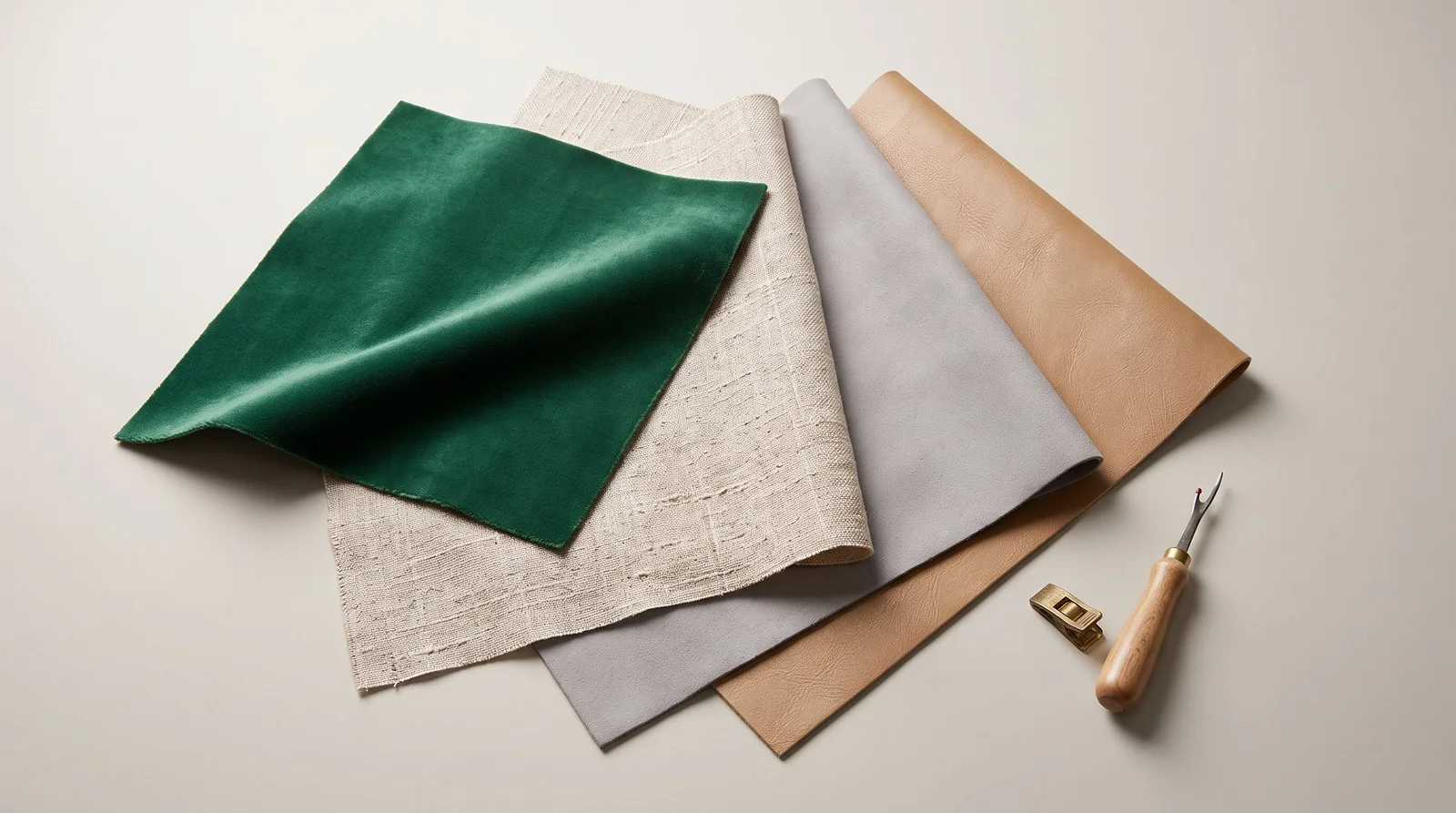
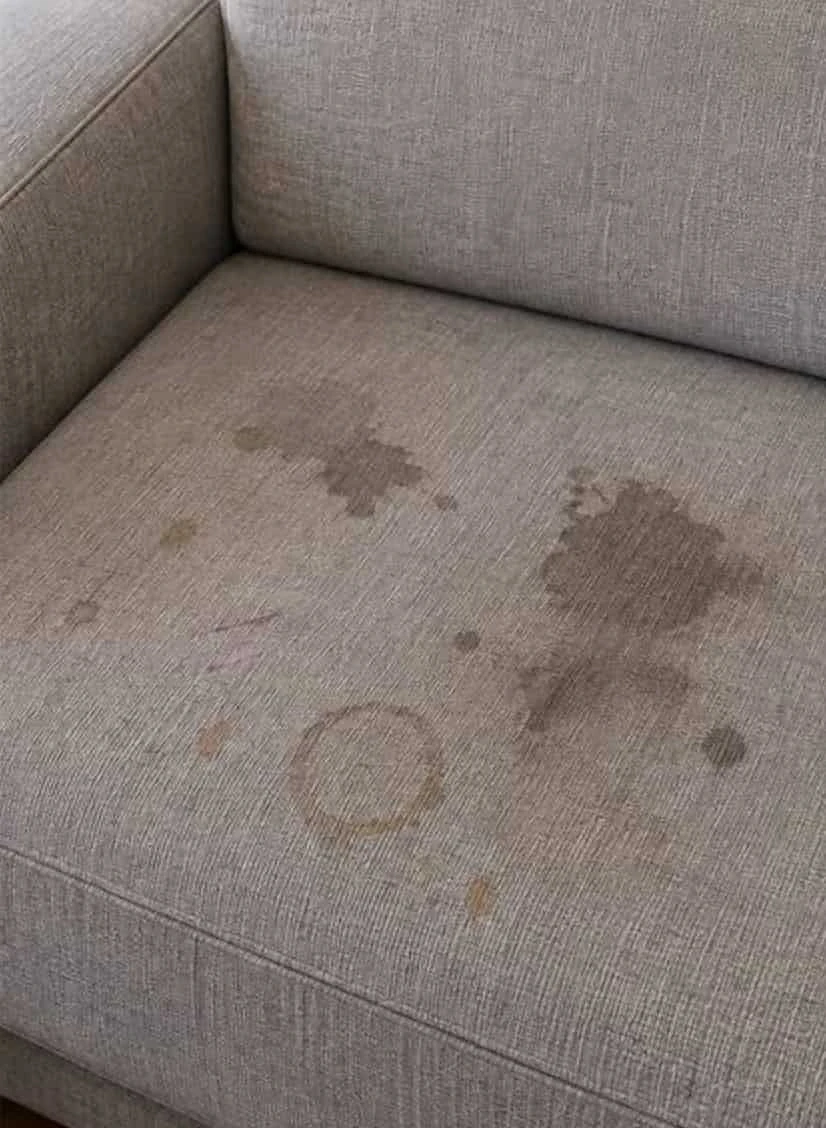
Before cleaning a sofa, it pays to know what it's made of. The same method that makes one fabric look new can leave rings on another or crush the pile of a third. Here's how the most common upholstery fabrics behave.
Start with the care code
Most sofas sold in Europe have a label under the seat cushions or on the underside of the frame. Next to the washing symbols you'll often find a cleaning code — a letter that tells you which methods the fabric tolerates:
| Code | Meaning | Water-based cleaning |
|---|---|---|
| W | Water-based cleaning | Yes |
| S | Solvent-based cleaning only | No |
| W/S | Water or solvent | Yes, carefully |
| X | Vacuum only | No |
No label? Then test on a hidden spot before doing anything else — the back of a cushion or the lower edge of the frame.
How to recognise your fabric
No label, no receipt, no idea what the sofa is made of? A few simple checks narrow it down.
Feel
Microfibre feels smooth and slightly suede-like. Cotton and linen feel dry and a little rough. Velvet and chenille have a soft pile that changes colour when you brush it with your hand.
Look at the weave
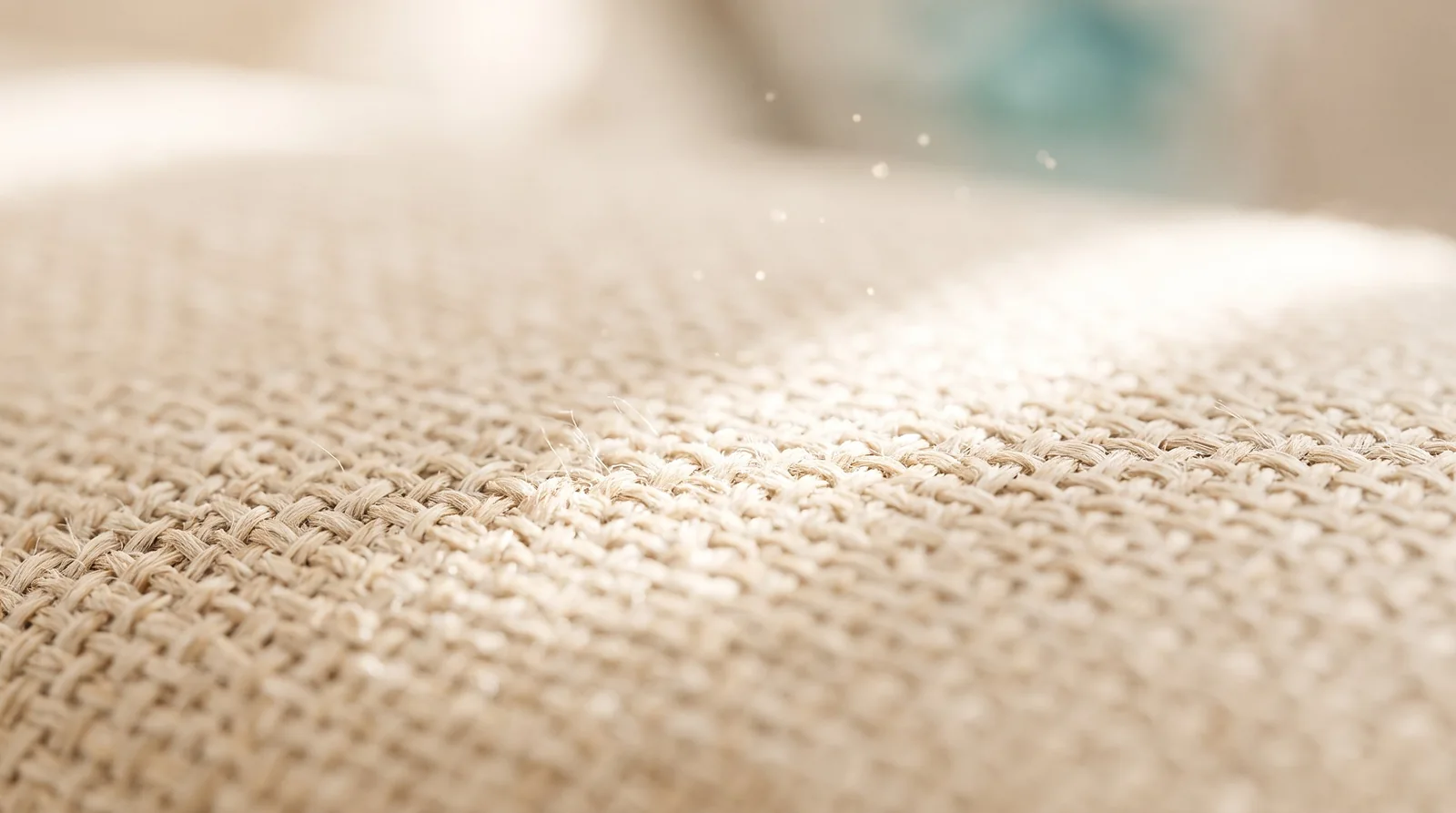
Turn a seat cushion over and look at the zip edge, where the fabric is cut. Synthetic threads are shiny and even; natural fibres are matte and slightly irregular.
A drop of water
Put one drop of water on a hidden spot. If it beads up, the fabric is synthetic or has a protective finish. If it soaks in straight away, it's probably cotton, linen or a blend — handle it more carefully.
The white cloth test
Before you use any product on a sofa, check that the colour won't run. It takes two minutes and saves a lot of trouble.
- dampen a white cloth with the product you want to use
- press it on a hidden spot for about ten seconds
- look at the cloth: any colour on it means the dye isn't fixed
- let the spot dry and check for rings or a lighter patch
If colour comes off, stop. Fabrics that bleed need a different, very gentle method — this is one of the cases where it's worth asking a professional first.
Fabric by fabric
Microfibre and polyester
The most forgiving fabrics. They handle water well, dry quickly and release most everyday stains. Their only weakness is that they show water marks if they're soaked unevenly — so clean whole panels, not single spots.
Velvet and chenille
Soft, with a pile that bends easily. Water is usually fine, but rubbing and too much pressure crush the pile and leave patches that look darker or lighter. Velvet needs gentle extraction and brushing in one direction while it dries.
Linen and cotton
Natural fibres that absorb water quickly and can shrink or lose colour. Many are marked S. When water is allowed, it has to be used sparingly and dried fast.
Leather and faux leather
Not cleaned with water extraction at all. Leather needs its own cleaner and conditioner; faux leather is wiped, not soaked.
First aid by fabric
The same spill needs a slightly different first response depending on the fabric:
| Fabric | Do | Avoid |
|---|---|---|
| Microfibre | blot, a little cold water | soaking |
| Polyester blends | blot, cold water, mild soap | hot water |
| Velvet, chenille | blot gently along the pile | rubbing, brushes |
| Cotton, linen | blot fast, minimal water | household sprays |
| Leather | wipe with a damp cloth | water left standing |
If you're unsure, blotting with a dry cloth is always safe. Everything else can wait for a professional.
Pilling, fading and shine
Not every problem on a sofa is dirt. Some changes come from wear, and it helps to know which ones cleaning can fix.
Pilling
Small bobbles form where fibres rub against each other or against clothes. Cleaning won't remove them, but a fabric shaver will — gently, on a low setting.
Sun fading
Fabric near a window slowly loses colour, usually on the backrest and the side facing the light. That's a change in the dye itself, so no cleaning can bring it back. Curtains or a throw stop it getting worse.
Shiny patches
On velvet and chenille, the pile gets pressed flat where people sit most. A careful clean and brushing the pile back up often improves it a lot; very old patches stay a little shinier.
Choosing a fabric for kids and pets
Buying a new sofa? With children or pets at home, the fabric matters more than the colour.
| Fabric | Spills | Claws | Verdict |
|---|---|---|---|
| Microfibre | very good | good | |
| Polyester blends | good | good | |
| Velvet (synthetic) | good | fair | |
| Cotton and linen | fair | fair | |
| Leather | very good | poor |
Mid-tones and fabrics with a subtle pattern hide everyday marks far better than very light or very dark plain colours. And whatever you choose — removable, washable covers on the seat cushions make life much easier.
Removable covers: wash or clean?
Zips on the cushions don't automatically mean the covers can go in the washing machine. Many are only there so the foam can be replaced at the factory.
Washed covers can shrink by a few percent — enough that they no longer fit — and come out a slightly different shade from the backrest, which can't be removed. That difference stays visible for years.
Only wash covers when the label clearly allows it, wash all of them together, at a low temperature, and put them back on while still slightly damp so they stretch into shape. When in doubt, clean them on the sofa.
How long a fabric lasts
A good upholstery fabric lasts ten years or more with normal use. Dirt shortens that: grit in the weave works like sandpaper every time someone sits down.
That's why regular vacuuming and an occasional deep clean are not only about looks — they slow the wear itself.
Everyday care for any fabric
- vacuum the seats and seams every couple of weeks
- turn and swap the seat cushions so they wear evenly
- keep the sofa out of direct sunlight to prevent fading
- deal with spills by blotting, never rubbing
Questions people ask us
Yes. We test the fabric on site before cleaning and choose the method based on how it reacts.
We clean them with dry or low-moisture methods. For delicate natural fibres we tell you honestly what result to expect.
We clean and care for leather with dedicated products, but not with water extraction.