 Sofas & armchairs



Coffee on the sofa: what to do in the first five minutes
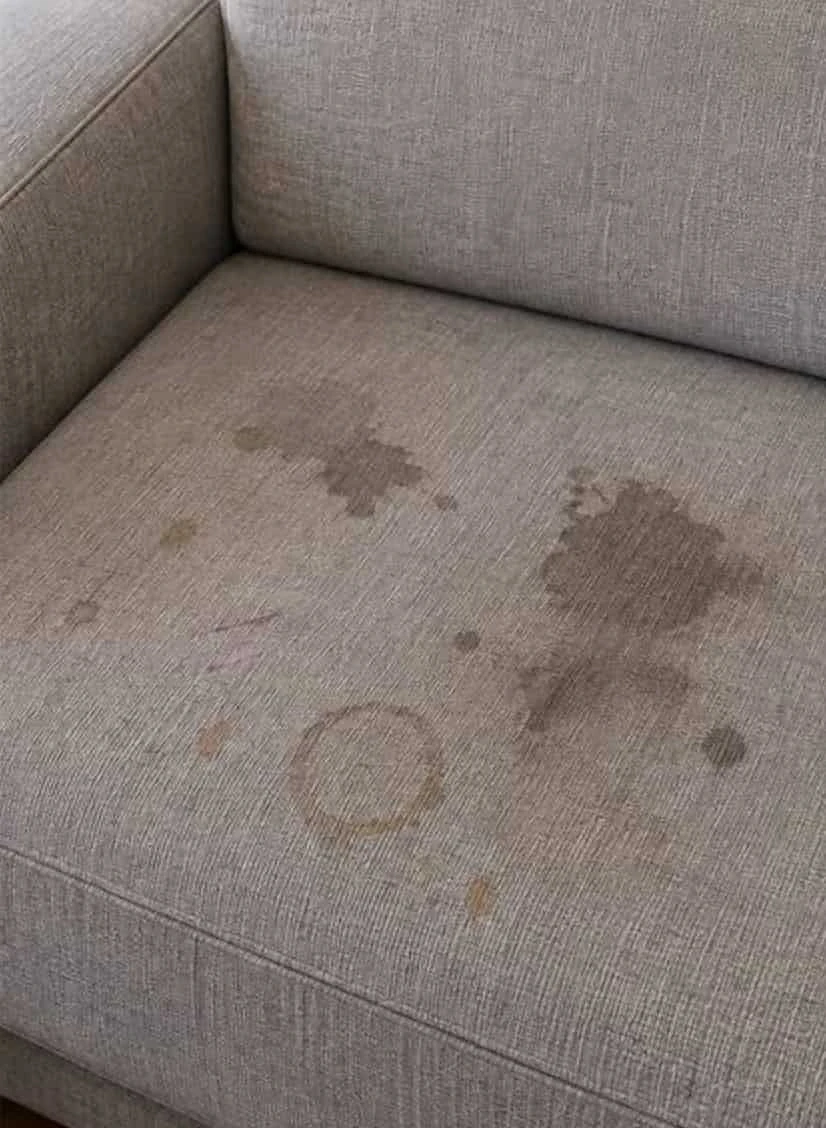
Coffee is one of the most common stains we see — and one of the most forgiving, if you act right. What you do in the first five minutes decides whether it comes out with a towel or needs a machine.
Why the first minutes matter
Coffee contains tannins — natural plant dyes that bind to textile fibres as they dry. While the spill is still wet, most of the coffee is sitting between the fibres rather than inside them, and a dry towel can lift a surprising amount of it out.
Once it dries, the picture changes. Water evaporates from the outside in, carrying the dye towards the edge of the stain. That is why an old coffee stain usually has a darker outline and a lighter centre — and why the outline is the hardest part to remove later.
Milk makes things trickier. Milk proteins set with heat, much like an egg in a pan. A latte or cappuccino stain treated with hot water can end up harder to remove than black coffee that was simply left alone.
What to do in the first five minutes
You don't need special products for this. A couple of clean white towels, a glass of cold water and a little patience are enough to deal with most fresh spills.
1. Blot, don't rub
Press a dry white towel onto the spill and lift it straight up. Move to a clean part of the towel each time and work from the edge towards the centre, so the stain doesn't spread. Rubbing pushes the coffee deeper and roughens the fibres, which leaves a visible patch even after the colour is gone.
2. Lift with cold water
Dampen a clean cloth with a little cold water — damp, not wet — press it onto the stain and blot again with a dry towel. Repeat until the towel stays almost clean. The goal is to dilute what's left and lift it out, not to wash the cushion.
3. Check the care code
Before you add anything other than water, look for the care label. It's usually sewn under the seat cushions or on the underside of the frame. The letter on it tells you what the fabric can take, and it's worth knowing before you reach for a spray.
4. Let it dry flat
Leave the cushion to air-dry where it is. Don't use a hairdryer or an iron to speed things up: heat sets whatever is still in the fabric, especially if there was milk in the cup. Open a window if you can — moving air dries it faster than heat and without the risk.
What the care code on your sofa means
Most upholstered furniture sold in Europe carries a cleaning code. It's a single letter, sometimes two, and it tells you which kind of cleaning the fabric tolerates. Here is what each one means for coffee at home:
| Code | Meaning | At home |
|---|---|---|
| W | Water-based cleaning is fine | Cold water and blotting |
| S | Solvent cleaning only | Blot dry, don't add water |
| W/S | Water or solvent | Cold water and blotting |
| X | Vacuum only | Blot dry and call a professional |
If there is no label at all, test first. Put a few drops of cold water on a hidden spot — the back of a cushion or the bottom edge of the frame — and blot it after a minute. If the colour comes off on the towel or a ring forms as it dries, stop there and only blot dry.
What makes it worse
Most of the stains we struggle with weren't difficult at first. They became difficult because of something done in the first hour, usually with the best intentions. These are the most common ones:
- Hot water — it sets milk proteins and fixes the dye
- Rubbing or scrubbing — it spreads the stain and roughens the pile
- Coloured or printed towels — their dye can transfer onto light fabric
- Household sprays, vinegar or dish soap — the residue attracts new dirt
- Soaking the cushion — water reaches the foam and comes back up as a ring
If you've already done one of these, don't worry — it rarely makes a stain impossible. It just means home first aid is probably no longer enough.
Milk, sugar and older stains
Black coffee is the easy case. Coffee with milk and sugar leaves behind proteins and sticky residue that cold water alone won't fully remove. The stain may look gone when wet and then reappear as a dull, slightly stiff patch once it dries.
An older stain isn't a lost cause either. Even stains that are weeks old usually fade a lot with a tannin pre-treatment and hot-water extraction, which rinses the fibres and pulls the dirty water back out instead of leaving it in the foam.
When it's time to call a professional
Home first aid works well on a fresh spill of black coffee on a water-friendly fabric. It's worth asking a professional when:
- a brown ring appeared after drying
- it was coffee with milk and is older than a day
- the fabric is velvet, silk, or marked S or X
- the spill soaked through into the seat foam
In these cases a deep extraction clean usually gives a much better result than another round of blotting — and it avoids the water ring that often follows a second attempt at home.
Questions about coffee stains
They can soak up a fresh spill, but they don't remove tannins and can leave a white residue in dark fabric.
Not usually. Old coffee stains often fade strongly with a tannin pre-treatment and extraction.
Only if the code is W or W/S, and test it on a hidden spot first. Rinse well — residue attracts dirt.