 Sofas & armchairs




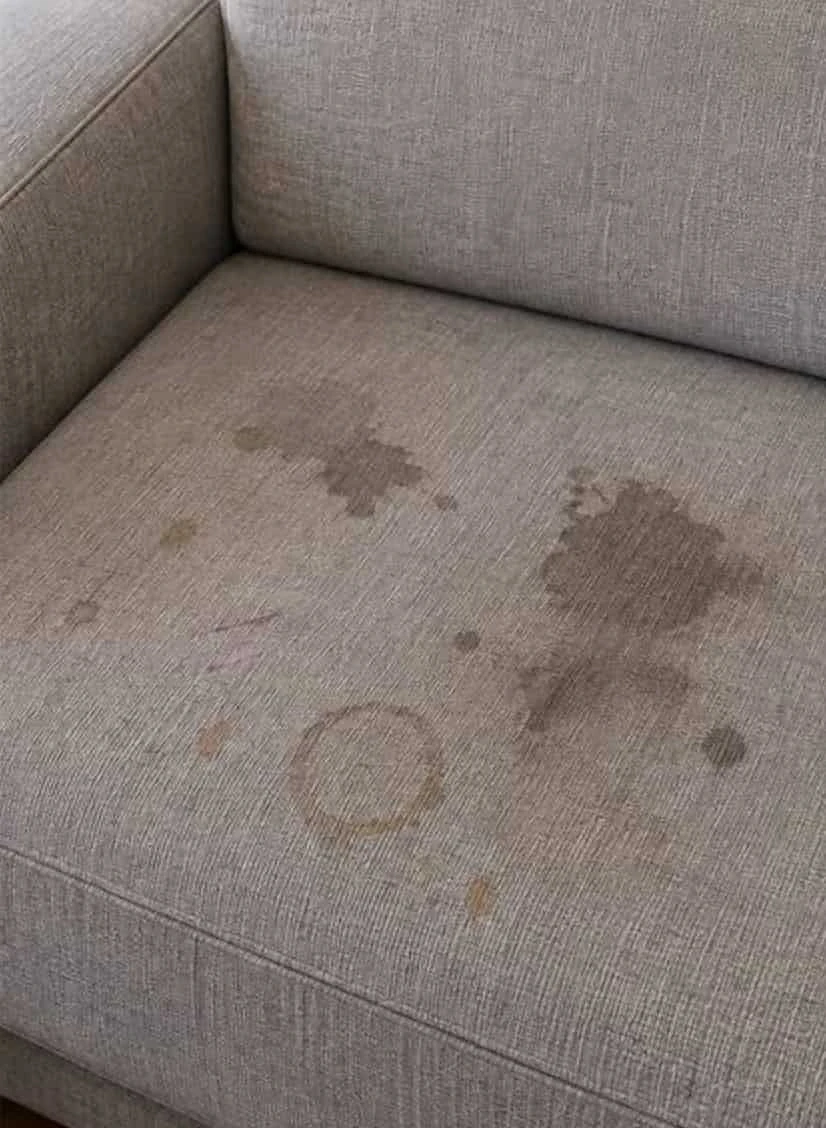
Red wine on a light sofa: what to do tonight
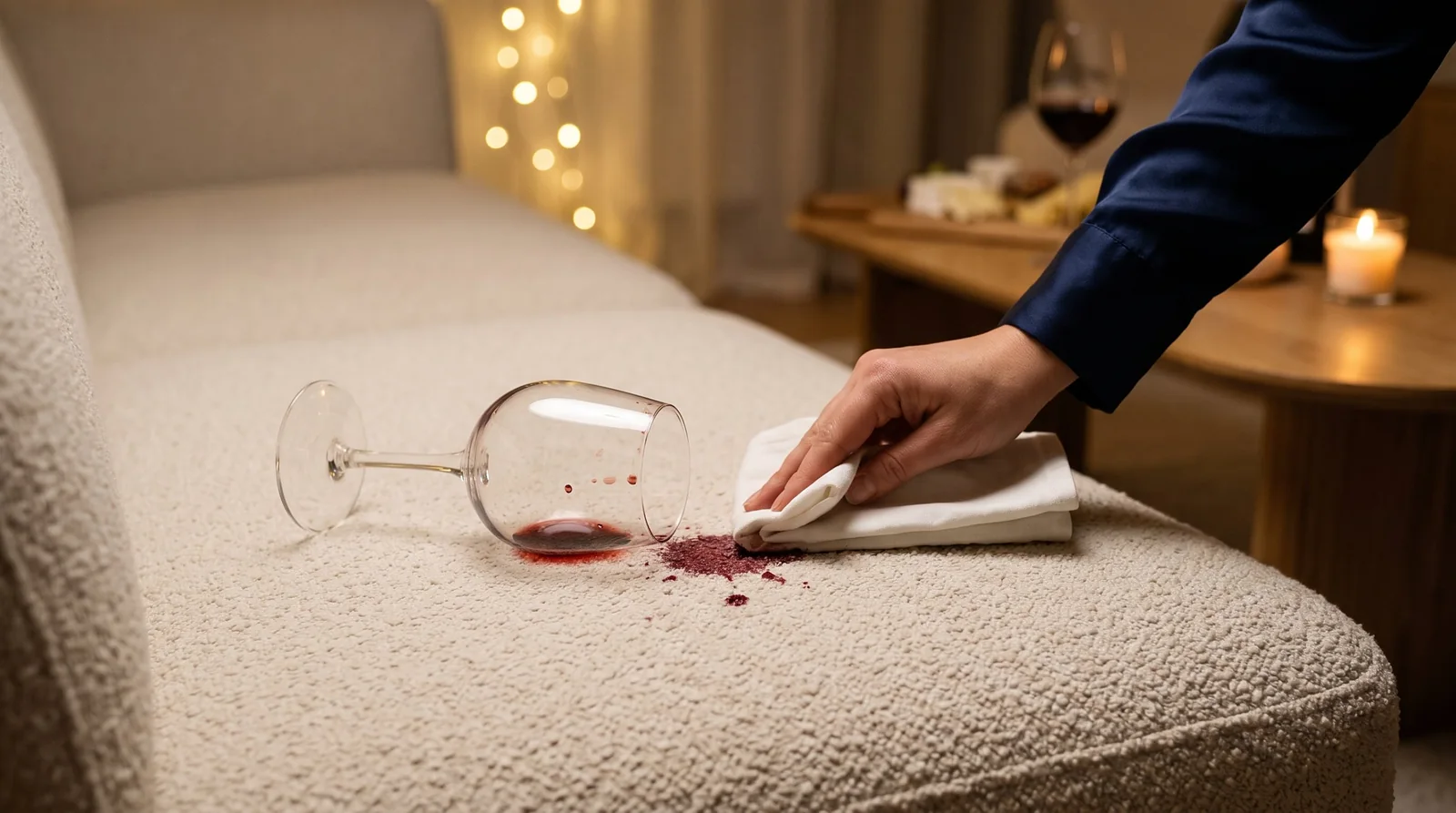
A glass of red wine on a light sofa looks like a disaster. Usually it isn't — as long as you avoid the two popular tricks that make it worse and do a few simple things in the first minutes.
Why red wine stains so stubbornly
Red wine owes its colour to anthocyanins, strong natural pigments, and it also contains tannins. Both bind to fibres quickly, especially natural ones like cotton and linen. The longer the wine stays wet, the deeper the colour travels.
That's why the first minutes matter most: you're trying to remove liquid while it's still liquid, before the pigments settle.
Two myths that make it worse
Salt
Salt absorbs some liquid, but it also draws the pigment into a tighter, darker ring and can leave abrasive crystals in the pile. On upholstery it usually does more harm than good.
White wine
The idea is to dilute the red. But white wine adds sugar and acid, and you end up with a bigger wet area and a sticky residue. Cold water dilutes just as well without the side effects.
Different fabrics, different first aid
The basics — blot, cold water, no rubbing — work everywhere. But a few fabrics need extra care.
Microfibre and polyester
The easiest case. Synthetic fibres don't absorb much, so wine often sits on top. Blot quickly and most of it lifts out with cold water.
Cotton and linen
Natural fibres soak wine up in seconds. Work fast, use as little water as possible and test any product on a hidden spot first — light linen can lose colour.
Velvet
Blot gently in the direction of the pile and never scrub; pressure flattens velvet and leaves a shiny patch that's harder to fix than the stain.
Rugs
Put an old towel under the rug if you can lift the edge, and blot from above. That way the wine is pulled out on both sides instead of spreading into the floor.
If the stain is already dry
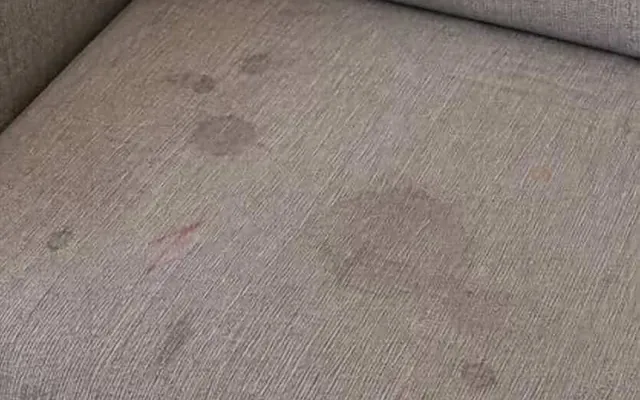
Found it the next morning? It's not lost, but the rules change. A dry wine stain has bonded with the fibres, and plain water won't move it much.
Don't try to dissolve it with hot water, vinegar or strong household cleaners. They often set the colour for good or bleach a lighter ring around it. Leave it dry, keep it out of the sun and don't cover it with a throw — friction spreads the dye.
Old wine stains are one of the most common jobs we see, and most of them come out to the point where you have to look for them. The sooner we get to it, the better the result.
Coffee, juice, cola and beer
Most dark drinks follow the same rules as wine: blot fast, use cold water and never rub. A few have their own quirks.
- coffee with milk — the milk fat needs a drop of mild washing-up liquid in the water
- fruit juice and smoothies — sugar makes the spot sticky and attracts dirt, so rinse it well
- cola — the colour comes out easily, the sugar doesn't; blot with plenty of water
- beer — mostly water and easy, but it smells sour if it's left to dry
Whatever the drink, the first two minutes decide more than any product you buy afterwards.
What to do tonight
- blot with white kitchen paper, from the edge inwards
- add a little cold water and blot again, several times
- press, don't rub — rubbing spreads the pigment
- skip hot water, steam and the hairdryer
- check the care code before using any product
If a pink shadow remains after drying, stop there. Repeated home attempts often leave a water ring around the stain, which is harder to remove than the stain itself.
Questions people ask us
Often they fade a lot with pigment pre-treatment and extraction. Fully removing old stains on natural fibres isn't always possible, and we say so in advance.
Not more than ordinary cold water. The bubbles don't lift the pigment.
Much easier. Blot and dilute with cold water — sugar residue is the main thing to remove.