 Sofas & armchairs

Pet accidents on upholstery: why the smell comes back
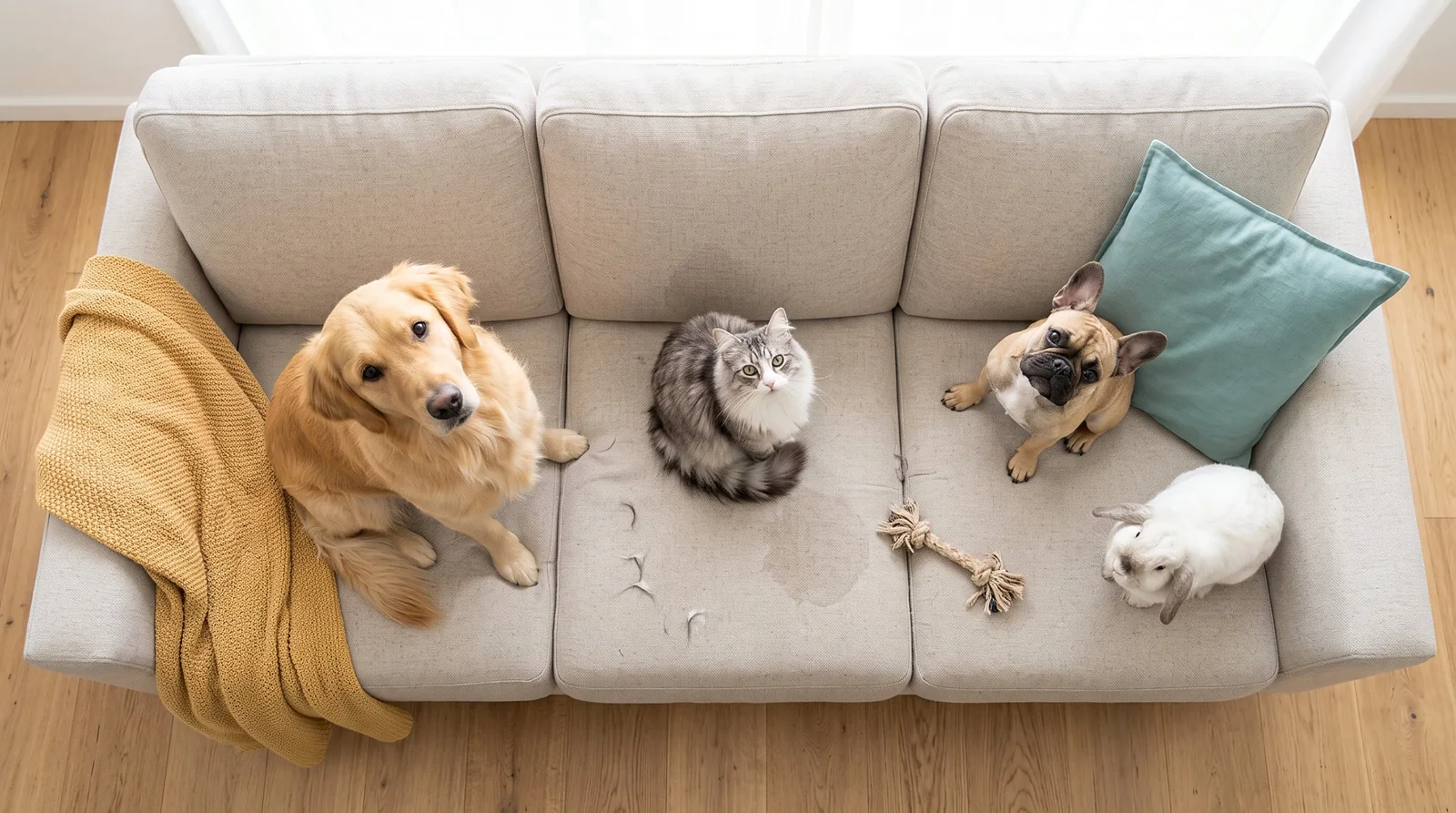
You cleaned the spot, it smelled fine for a day — and then the smell came back, usually on a warm or humid evening. That isn't bad luck. It's what happens when the cleaning only reaches the surface.
Why the smell comes back
Urine soaks through the fabric into the foam underneath within minutes. What you can reach with a cloth is only the top few millimetres; most of it sits deeper, in a material that holds liquid like a sponge.
As it dries, urine leaves salts and uric acid crystals behind. They have almost no smell when dry — but they react to moisture. A humid day, a damp cloth or a cup of tea spilled nearby is enough to wake them up again.
There's a second problem: pets return to places that smell like them. A spot that still smells, even faintly, is a spot that invites the next accident.
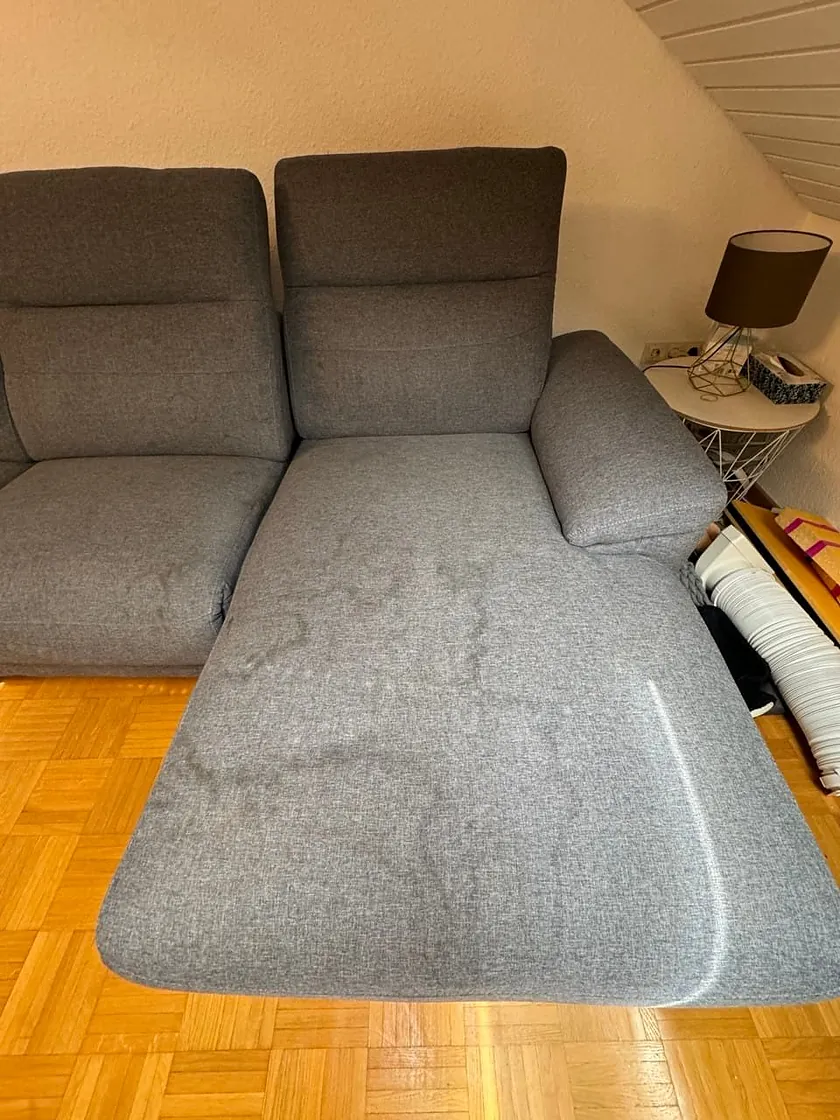
What to do straight away
Blot, blot, blot
Press thick paper towels or an old towel onto the spot and stand on it if you can. The more you lift out now, the less reaches the foam.
Cold water only
Dampen and blot again with cold water. Avoid steam cleaners and hot water: heat binds the proteins in urine to the fibres and makes the smell permanent.
An enzyme cleaner, not a perfume
Enzyme products break down uric acid. Air fresheners and scented sprays only cover the smell for a few hours, and your pet can still smell it.
Hair, dander and drool
Accidents get the most attention, but most pet owners fight a quieter problem every day: hair and dander working their way into the fabric.
Hair sits on top and is easy to see. Dander — tiny flakes of skin — sinks deeper and is what most people with pet allergies react to. Regular vacuuming removes the hair; only a wet deep clean reaches the dander in the fibres and the foam.
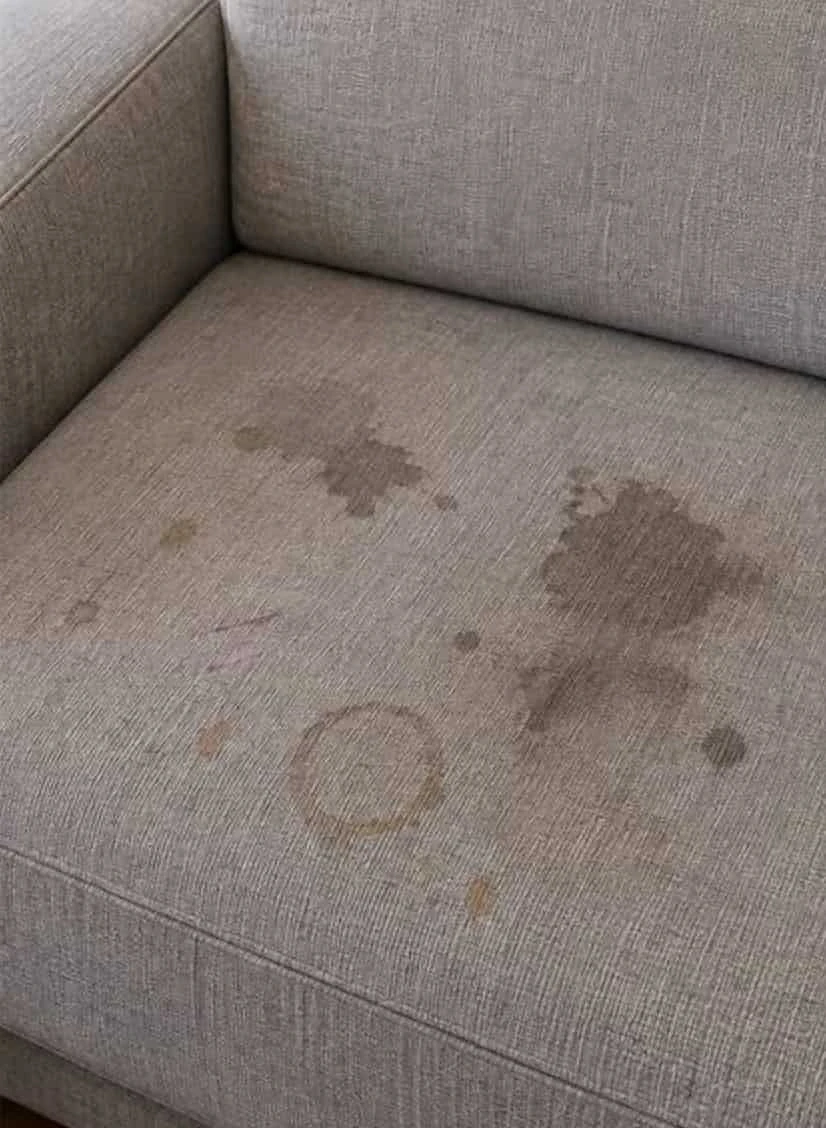
Drool and the oils from a dog's coat leave darker, slightly greasy patches where your pet likes to lie. They build up slowly, so you often only notice them when you compare that spot with the rest of the sofa.
Quick tip
A rubber glove or a slightly damp rubber brush pulls hair out of fabric far better than most vacuum attachments. Run it in one direction and the hair rolls up into a ball.
Muddy paws and sick
Muddy paws
Let mud dry completely, then vacuum it away. Wiping wet mud only pushes it deeper into the weave. What's left after vacuuming can be dabbed with a little cold water.
When a pet is sick
Remove as much as you can with a spoon or a piece of card, lifting rather than wiping. Blot with cold water and avoid hot water and steam — like urine, it contains proteins that heat sets into the fabric.
If the stain or smell is still there after it dries, don't keep adding products. Layers of different cleaners make it harder for us to remove everything later.
Everyday protection that works
You can't stop a pet from loving the sofa, but you can make it much easier to keep clean:
- a washable throw on your pet's favourite spot, washed every week
- a pet bed next to the sofa, so there's an equally good alternative
- a quick vacuum of the seams twice a week
- a cushion swap every month so wear is even
- a deep clean once a year — twice if your pet sleeps on it
If your pet is still being house-trained, keep it off upholstered furniture for a few weeks. It's far easier than removing the same smell over and over.
Cats: scratching and hair
Cats bring their own challenges. Scratching damages the weave, and loose threads catch dirt more easily, so damaged areas look grey faster than the rest of the sofa.
A scratching post placed right next to the sofa works better than one in another room — cats scratch where they want to leave their scent. A little catnip on the post helps too.
Cat hair is fine and works into the fabric more than dog hair. Short, regular sessions with a rubber brush keep it under control far better than one long clean-up at the weekend.
What a deep clean does differently
A professional clean flushes the fabric and the foam with a cleaning solution and extracts it again right away, so the residue leaves the cushion instead of spreading. For older spots we pre-treat with an enzyme solution and give it time to work before rinsing.
- the smell returns after cleaning
- the spot is older than a day
- it happened more than once in the same place
- the cushion felt wet all the way through
Questions people ask us
In most cases, yes. With very old or repeated accidents we may need two treatments, and we tell you that before we start.
Yes. The products are rinsed out, and once the sofa is dry your pet can use it as usual.
They can help a fresh spot a little but often push the urine deeper. Blotting and an enzyme cleaner work better.