 Sofas & armchairs
Office chairs: a cleaning rhythm for small teams
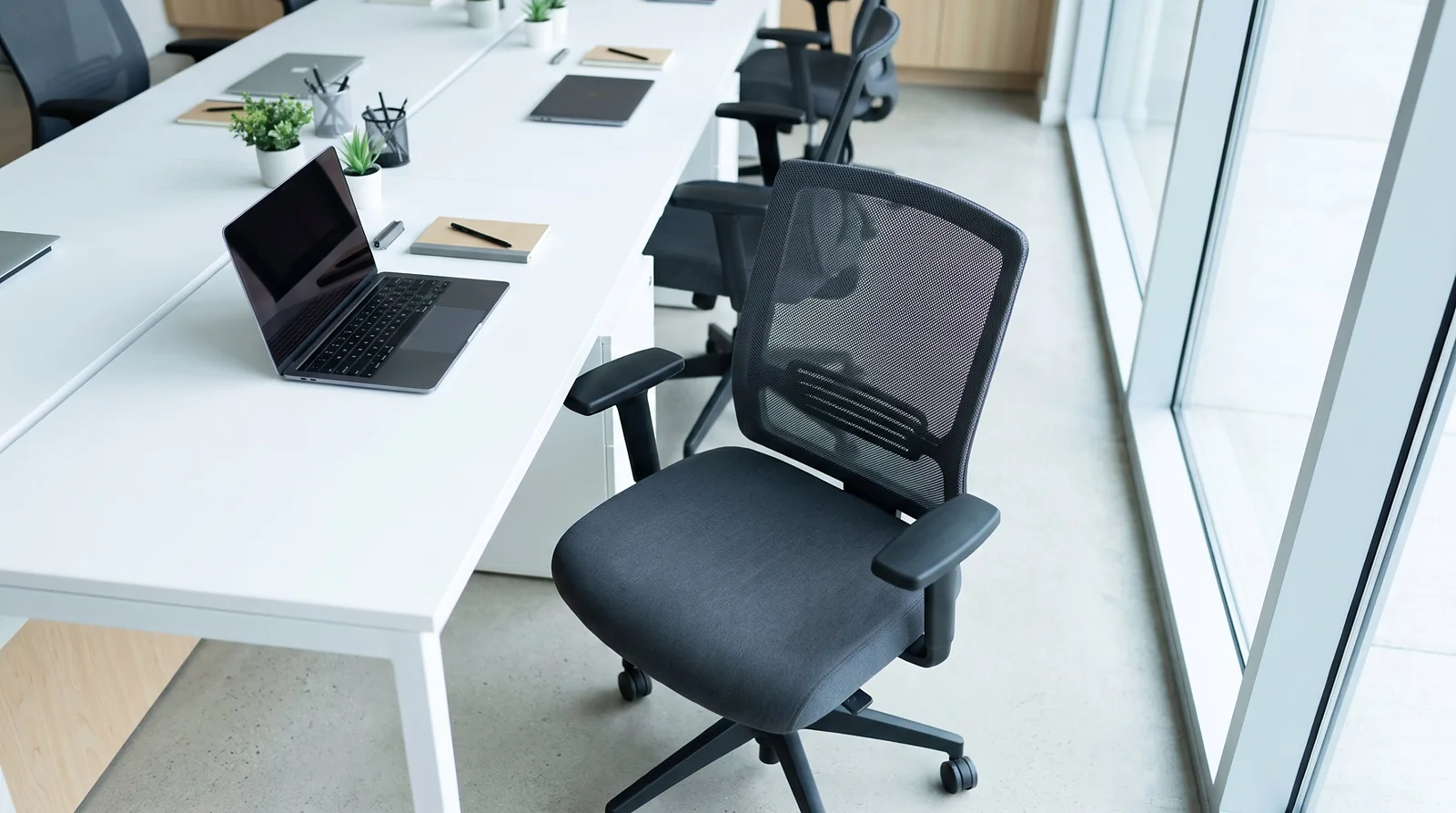
Office chairs are used eight hours a day, five days a week — far more than any sofa at home. In a small team they quietly become the dirtiest textiles in the office. With a simple rhythm, cleaning them doesn't have to cost a working day.
Why office chairs get dirty so fast
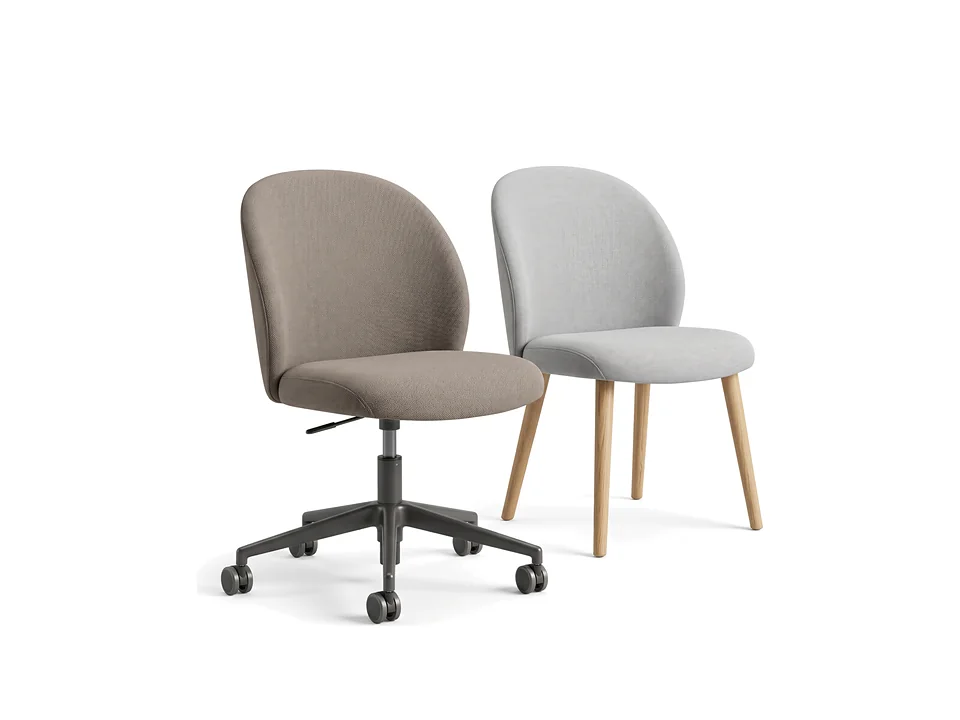
A desk chair takes in sweat, skin oils, crumbs and coffee every day, mostly on the seat front and the armrests. The fabric is usually dark, so the dirt stays invisible for a long time — until the chair starts to smell or the armrests look shiny.
In shared offices there's another factor: several people may use the same chair, and nobody feels responsible for it.
What gets dirty first
Not everything in an office wears at the same speed. Here's where we usually see dirt first:
| Piece | Typical problem | Clean every |
|---|---|---|
| Desk chairs | dark armrests, seat edge | 6–12 months |
| Meeting room chairs | coffee spots, many users | 6–12 months |
| Reception sofa | dust, shoes, visitors | 6 months |
| Kitchen and break area | food and drink stains | 6 months |
| Carpet tiles at the entrance | street dirt | 3–6 months |
Armrests and the front edge of the seat get dirty first, because that's where hands and knees touch all day.
Why it matters beyond looks
Clean chairs look better on a video call, but that's the smallest part of it. Office seating is shared, touched by many hands and rarely cleaned — and it shows in ways people notice without saying.
Fabric holds dust, skin flakes and food crumbs, and with them allergens. In a busy office with poor ventilation, upholstery is one of the main sources of the stale smell that greets you on Monday mornings.
There's also the first impression. Visitors judge a company by its reception area, and a stained sofa there says more than any brochure on the table.
A rhythm that works for small teams
Every month: vacuum
Five minutes per chair with an upholstery nozzle removes crumbs and dust before they work their way into the fabric.
Every six months: deep clean
Hot-water extraction removes sweat residue, odours and stains from the seat and back. For busy offices or open spaces, every three to four months is better.
When needed: spot cleaning
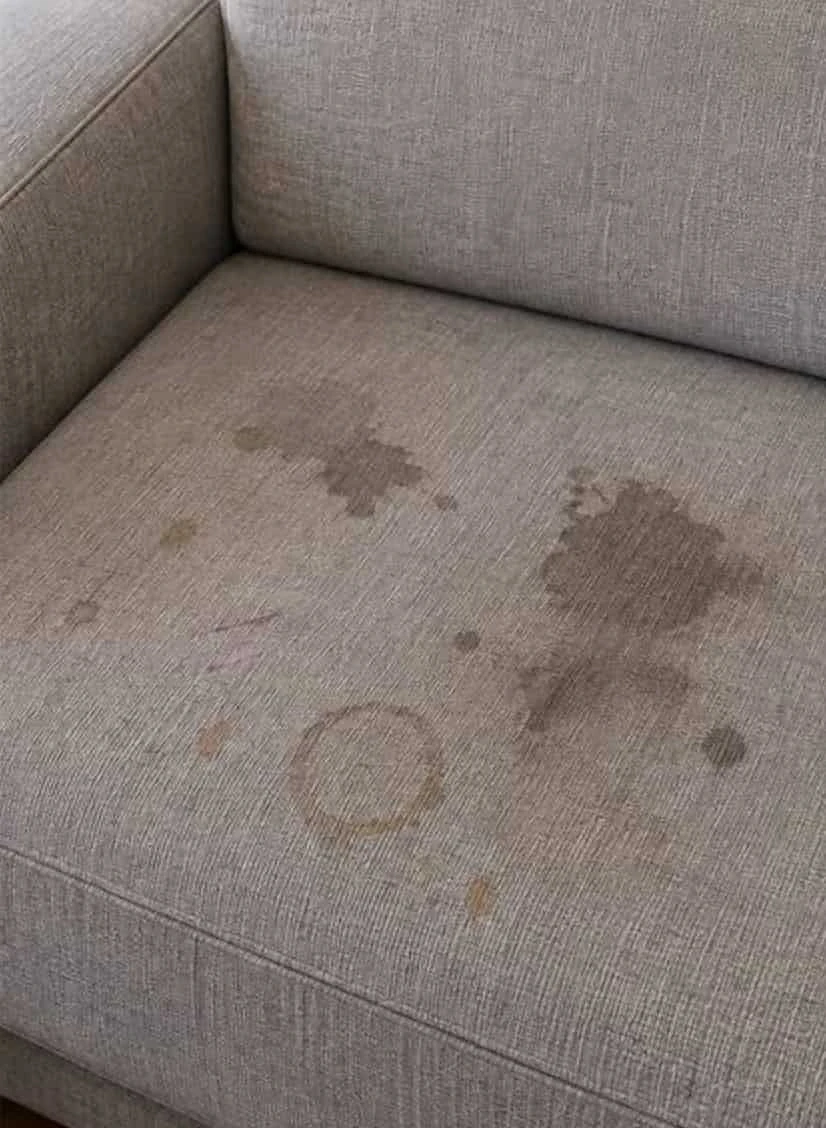
Coffee or food spills should be blotted right away with a dry cloth and cold water — the same rules as at home.
What a professional office clean includes
If you've never booked one, here's what usually happens. We start with a quick walk-through to see the chairs, the fabrics and any problem spots, and agree the price before anything else.
Each chair is vacuumed, the worst marks are pre-treated, and the fabric is cleaned with hot water extraction — the solution goes in and comes straight back out together with the dirt. Armrests and plastic parts are wiped down at the same time.
For a typical small office of fifteen to twenty chairs, that's one evening. The chairs are slightly damp when we leave and ready to use in the morning.
How to plan it without losing a day
- book the cleaning for late afternoon or evening
- clear the desks around the chairs beforehand
- leave the windows tilted overnight
- chairs are dry and ready the next morning
For larger teams we can also split the work over several evenings, so only part of the office is affected at a time.
Questions people ask us
Yes. Mesh backs are cleaned gently with low moisture; the fabric seat gets a full extraction clean.
Yes, with all company details. Regular cleaning can be agreed with a fixed schedule.
Around 10–15 minutes per chair, depending on the fabric and how dirty it is.